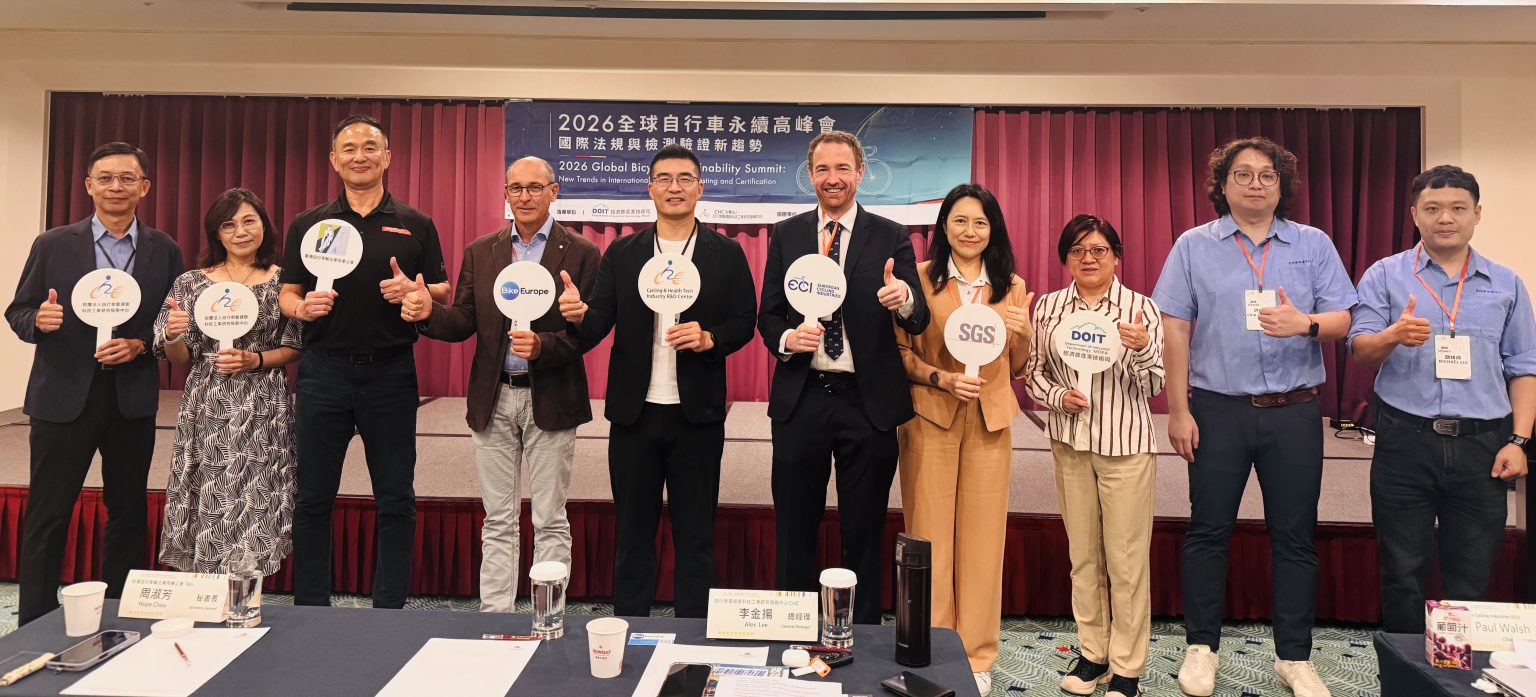
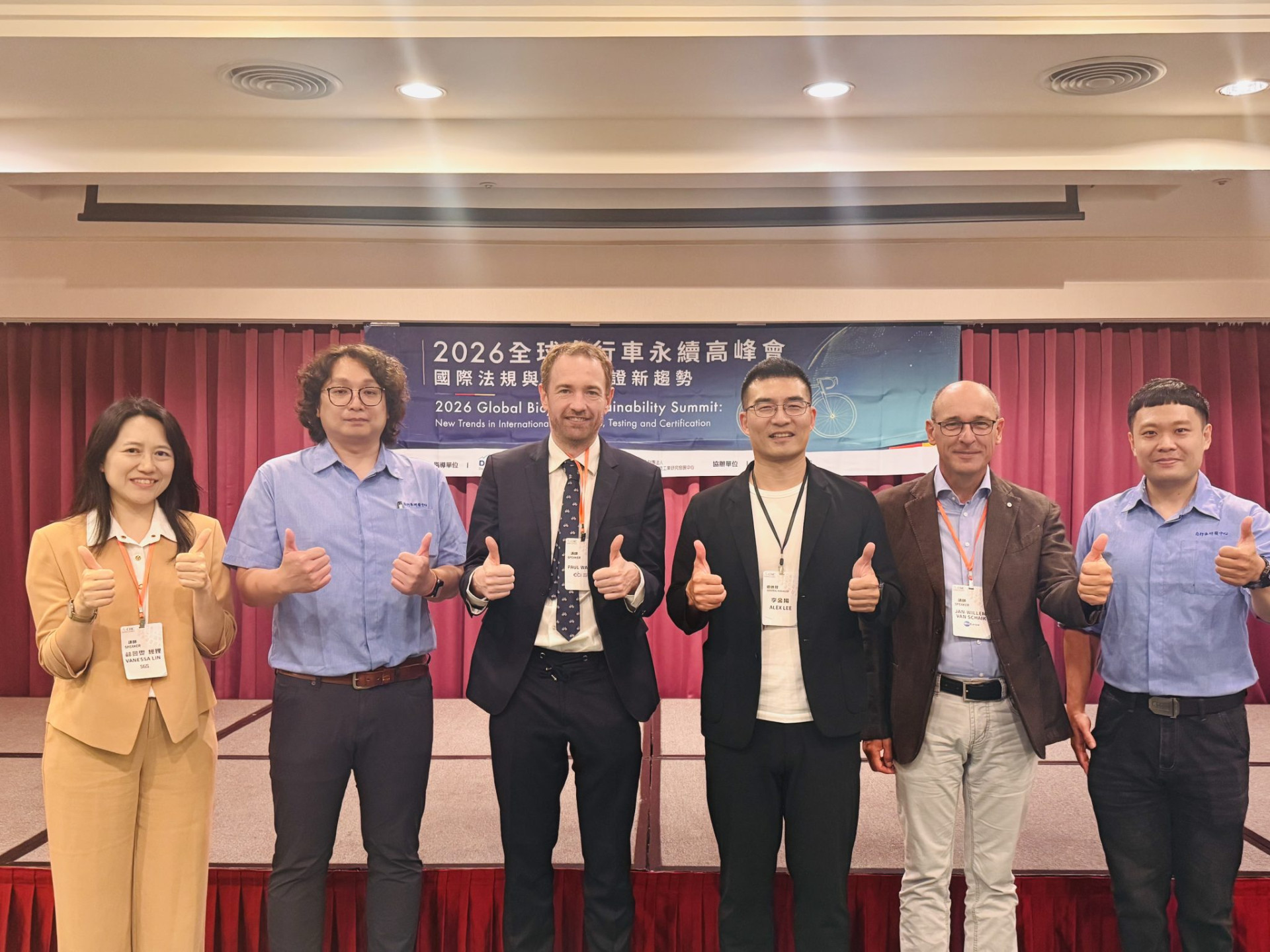
From left to right: Vanessa Lin, Marketing Manager of Connectivity & Products at SGS Taiwan; Jia-Hao Xu, Sports Science Department at CHC; Paul Walsh, CEO of ECI; Alex Lee, General Manager of Cycling & Health Tech Industry R&D Center; Jan-Willem van Schaik, Editor-in-Chief of Bike Europe; Michael Liu, Project Manager of Testing & Certification Department at CHC
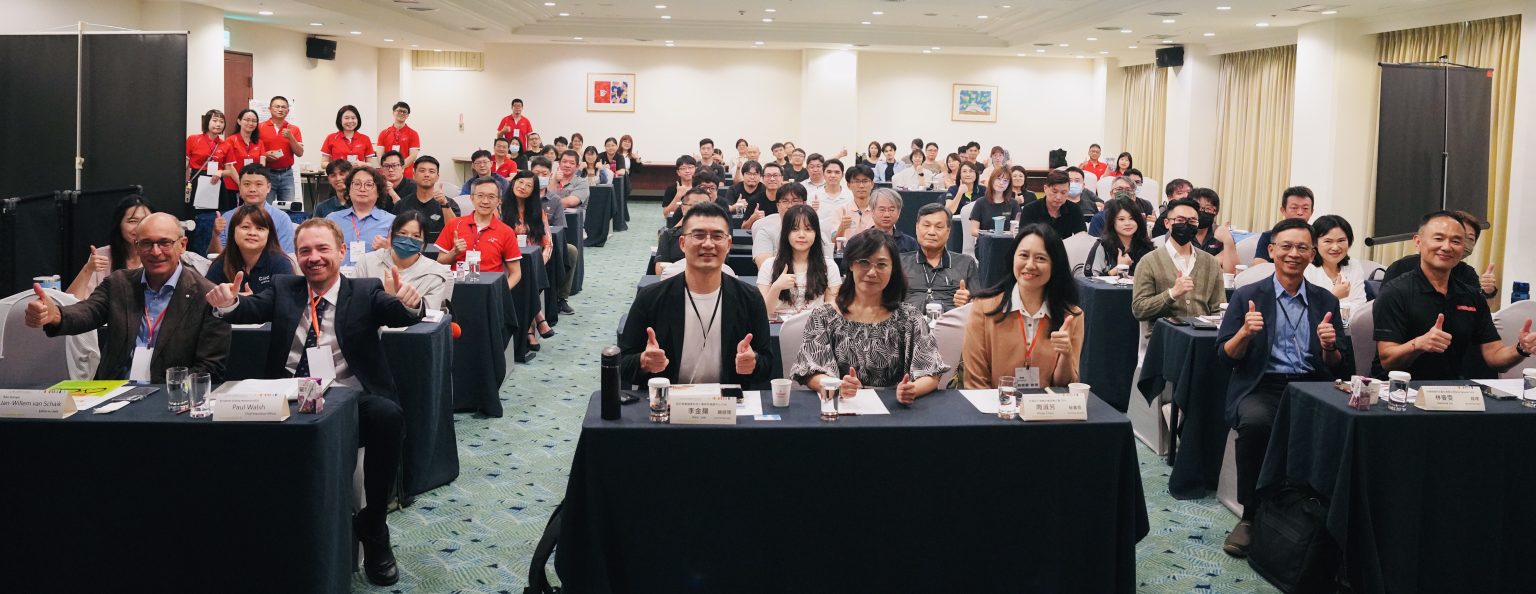
On September 14, 2026, the Global Cycling Sustainability Summit was held in Taichung. Organized by CHC in collaboration with BIKE EUROPE, ECI, and SGS, the summit brought together European industry leaders and experts to discuss emerging market trends, regulations, and testing and certification.
Dr. Alex Lee, General Manager of the Cycling & Health Tech Industry R&D Center (CHC) highlighted Taiwan’s critical role in the global bicycle industry, backed by a complete supply chain, mature manufacturing, and high agility across complete bikes, components, and E-bikes. However, the global market is evolving rapidly, as net-zero emissions, circular economy principles, product safety, transparency, and corporate responsibility increasingly become essential market requirements. CHC will continue to bridge Taiwan’s bicycle industry and the global market, providing technical, testing, and certification resources to help companies navigate evolving global regulations.

Dr. Alex Lee, General Manager of CHC
Jan-Willem van Schaik, BIKE EUROPE Editor-in-Chief, opened the session by analyzing the current state of the European market through data. He highlighted a key reality: E-bikes are firmly established across Europe, but high penetration does not always translate into strong market growth.

Europe’s bicycle market is shifting from rapid growth toward inventory efficiency and product value. Jan also noted fat-tire E-bike compliance risks and uncertainty surrounding Accell Group.
For Taiwanese suppliers, the focus should extend beyond orders to inventory, financial health, and actual market demand.
Paul Walsh, CEO of ECI, focused on three key issues: corporate bike leasing, illegal and non-compliant products, and future Taiwan-Europe cooperation. He also noted that ECI plans to release an industry statement to strengthen market regulation and promote fair competition.

Paul concluded by emphasizing that Europe and Taiwan should complement, not replace, each other through strategic collaboration and value co-creation. The goal is not “Made in Europe” or “Made in Taiwan,” but to “create the right products” together.
Michael Liu, Project Manager at CHC, highlighted that as the market restructures and regulations tighten, access to the EU market increasingly depends not only on product quality, but also on “data and trust.”He clarified that the DPP Registry serves as an index rather than a centralized database, while full passport data remains the responsibility of economic operators. With battery passport requirements involving extensive data management, the challenge goes far beyond simply generating a QR code.
To support Taiwanese companies, CHC is integrating its testing and certification capabilities with a Battery Passport platform, providing support for data governance, compliance management, and evidence preservation. This reflects CHC’s strategy: “Europe sets the standards; Taiwan builds the solutions.”
Jia-Hao Xu, Sports Science Department at CHC, emphasized that the Battery Passport is more than a QR code it is a data integration project. With requirements taking effect for applicable batteries from February 18, 2027, Taiwanese companies should begin data mapping and gap analysis across their supply chains to prepare for compliance.
Vanessa Lin, Marketing Manager of Connectivity & Products at SGS Taiwan, emphasized that a battery passport is more than just a QR code; it requires complete, accurate, traceable, and continuously updated lifecycle data. This will necessitate closer data collaboration among brand owners, battery manufacturers, suppliers, and testing and certification bodies.
The summit highlighted three major shifts in Europe’s bicycle industry: market restructuring, evolving business models, and changing regulations. For Taiwan, future competitiveness will depend on integrating its strengths in R&D and manufacturing with data, compliance, verification, and services. As the industry shifts from cost to value competition, success will be about not just making products, but “making the right things together, in the right way.”