
The "2026 Meet Greater South" event took place from August 28 to 29 at the Kaohsiung Exhibition Center. The Department of Industrial Technology (DoIT) under the Ministry of Economic Affairs (MOEA) joined forces with research institutes and startup teams to showcase achievements in cross-domain AI applications and industrial tech innovations. By linking R&D with practical industry needs, the initiative aims to accelerate the commercial application of innovative technologies and align technological outcomes with market demands.
Guo Zhao-Zhong, Director-General of DoIT, stated that the Ministry is actively expanding the R&D capabilities of research institutes in southern Taiwan to gradually complete the region's industrial innovation ecosystem. Leveraging "Meet Greater South"—a major startup and industrial event in southern Taiwan—DoIT is showcasing supported R&D achievements to broaden interaction and collaboration between research institutes and local industries. The pavilion's exhibits this year focused on two main highlights: "AI Across All Industries" and "Industrial Upgrading." By providing technological solutions to manufacturing process, quality control, and labor shortage pain points, DoIT hopes to drive the commercialization of more innovative results, injecting fresh momentum into industrial upgrading across central and southern Taiwan.
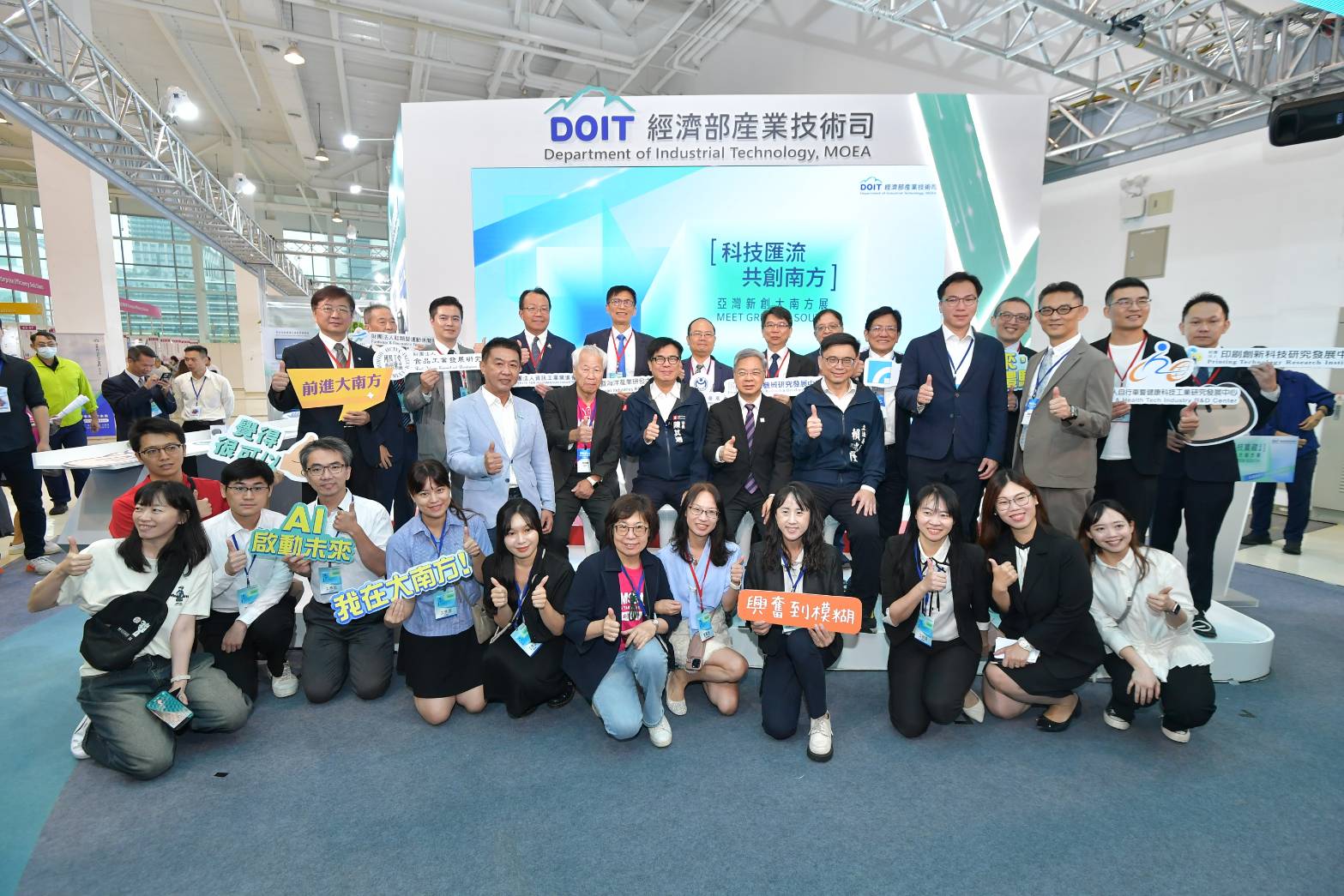
Grand Opening of the 2026 Meet Greater South in Kaohsiung. Minister of Economic Affairs Kung Ming-hsin, Kaohsiung Mayor Chen Chi-mai, Director-General of the MOEA Department of Industrial Technology Guo Zhao-Zhong, Business Next Publisher Ho Fei-peng, and the MOEA Department of Industrial Technology R&D team pose for a group photo.
Photo / Courtesy of ITRI
In the DoIT theme area, the Cycling & Health Tech Industry Development Center (CHC) exhibited its "Smart E-Bike (AI Bike)," which integrates three core technologies: "Bicycle Common Protocol Technology," "AI Road Condition Perception," and "Smart Suspension Control." Centered on rider needs, the system connects electronic components, chips, and sensor control technology into an integrated smart bicycle system. During a ride, the system reacts in real time to human-vehicle dynamics, pedaling cadence, and road conditions—coordinating power assist and suspension control at intersections, slopes, or uneven surfaces to warn riders of potential risks in advance while enhancing stability and comfort.
To overcome integration barriers among electronic components from different brands, CHC gathered over 30 companies across the bicycle, electronics, semiconductor chip, and sensor control sectors to establish the "Cycling Common Protocol Alliance (CCPA)." By using the CCPA common protocol to link whole-vehicle systems, a foundation for seamless coordination between vehicles and components has been established. This effort is expected to reduce system integration costs by 40% and boost high-end product value by over 30%, assisting Taiwan's bicycle industry in evolving from a component manufacturing base toward integrated smart vehicle systems and high-value product development.
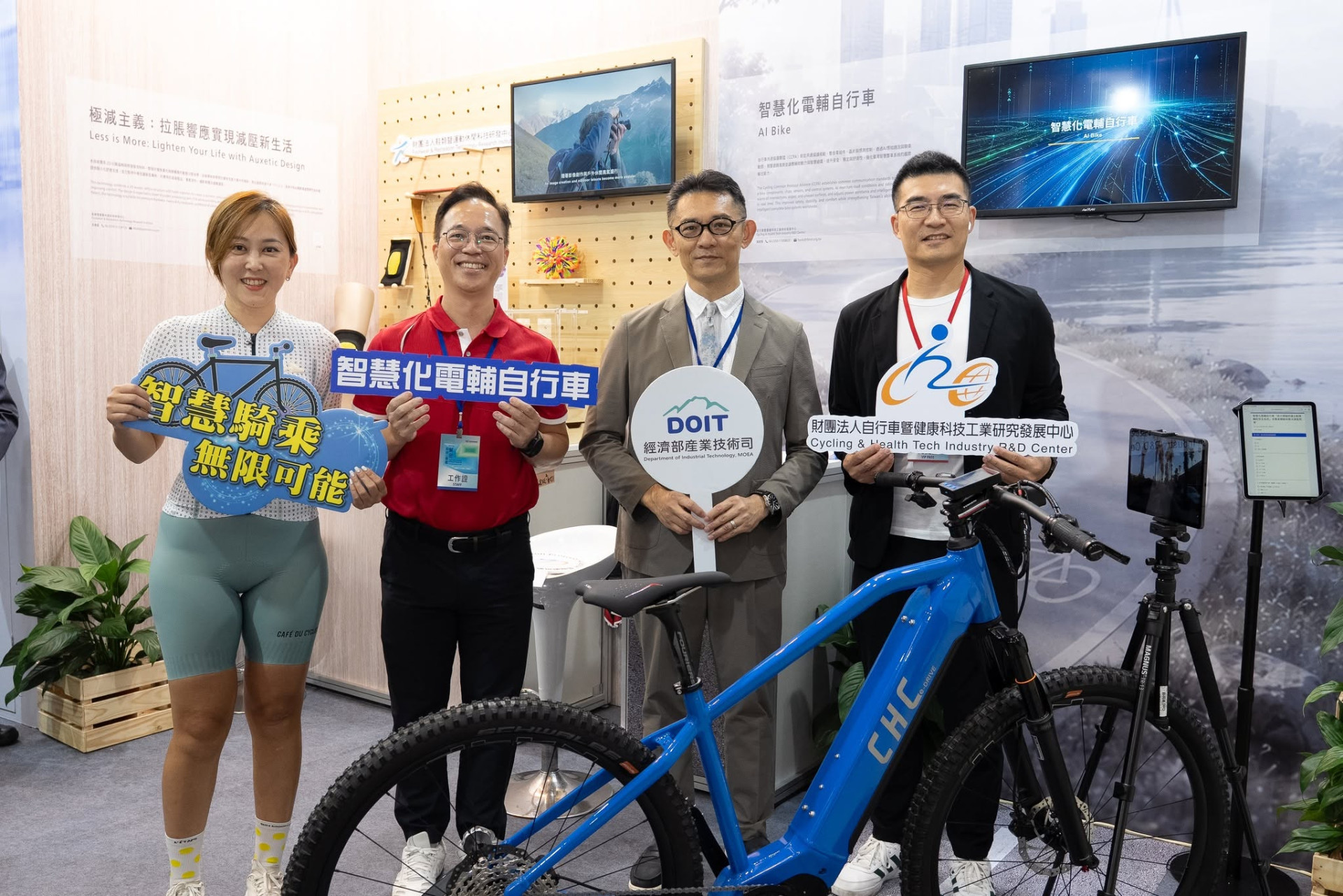
Director-General of the MOEA Department of Industrial Technology Guo Zhao-Zhong visits the Cycling & Health Tech Industry Development Center (CHC) to tour the "Smart E-Bike (AI Bike)." He praised the achievements in smart riding technology and affirmed support for Taiwan's bicycle industry in its transition toward smart, high-value development.